Council Designation of Area for Building Emergency Management
A designation enables Council to take specific actions under the Building Act to help manage ongoing risks to people from buildings affected by flooding and land instability.
Related Pages
About the February 2026 designation
The decision to designate Ōtorohanga District as an area for building emergency management was made on 23 February 2026, following the February floods severe weather event. A designation enables Council to take specific actions under the Building Act to help manage ongoing risks to people from buildings affected by flooding and land instability.
The designated area covered the entire Ōtorohanga District and was initially reviewed on 25 May 2026 and subsequently reviewed on 18 August 2026. The designation area has been further reduced from three to two remaining properties.
Twenty-five properties were subject to yellow placards following the weather event. Twenty-one still have yellow placards. A yellow placard indicates a building has restricted access due to identified safety risks, and entry is permitted only under specified conditions.
The reduced designation now applies only to the two remaining properties where unresolved geotechnical concerns continue to exist. In these cases, the designation remains in place to manage the ongoing land stability and safety risks associated with those sites.
A designation of an area can be in place for up to three years – with reviews every 90 days – and can be subsequently extended one time for a further three years, during which certain powers may be exercised.
Designated Area for Building Emergency Management:
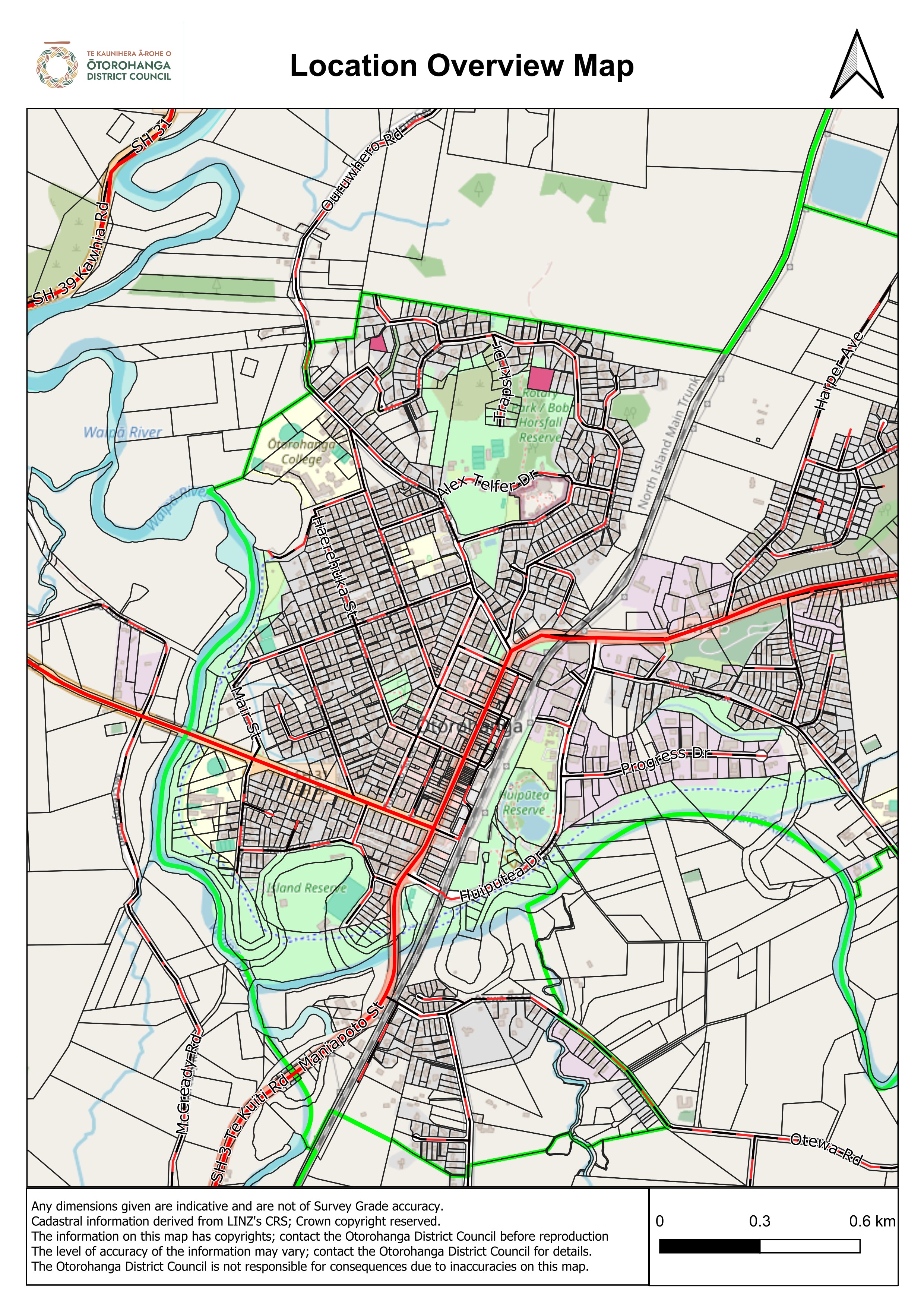
Ōtorohanga District: Reduced from entire district to two properties on 18 August 2026 – refer to map
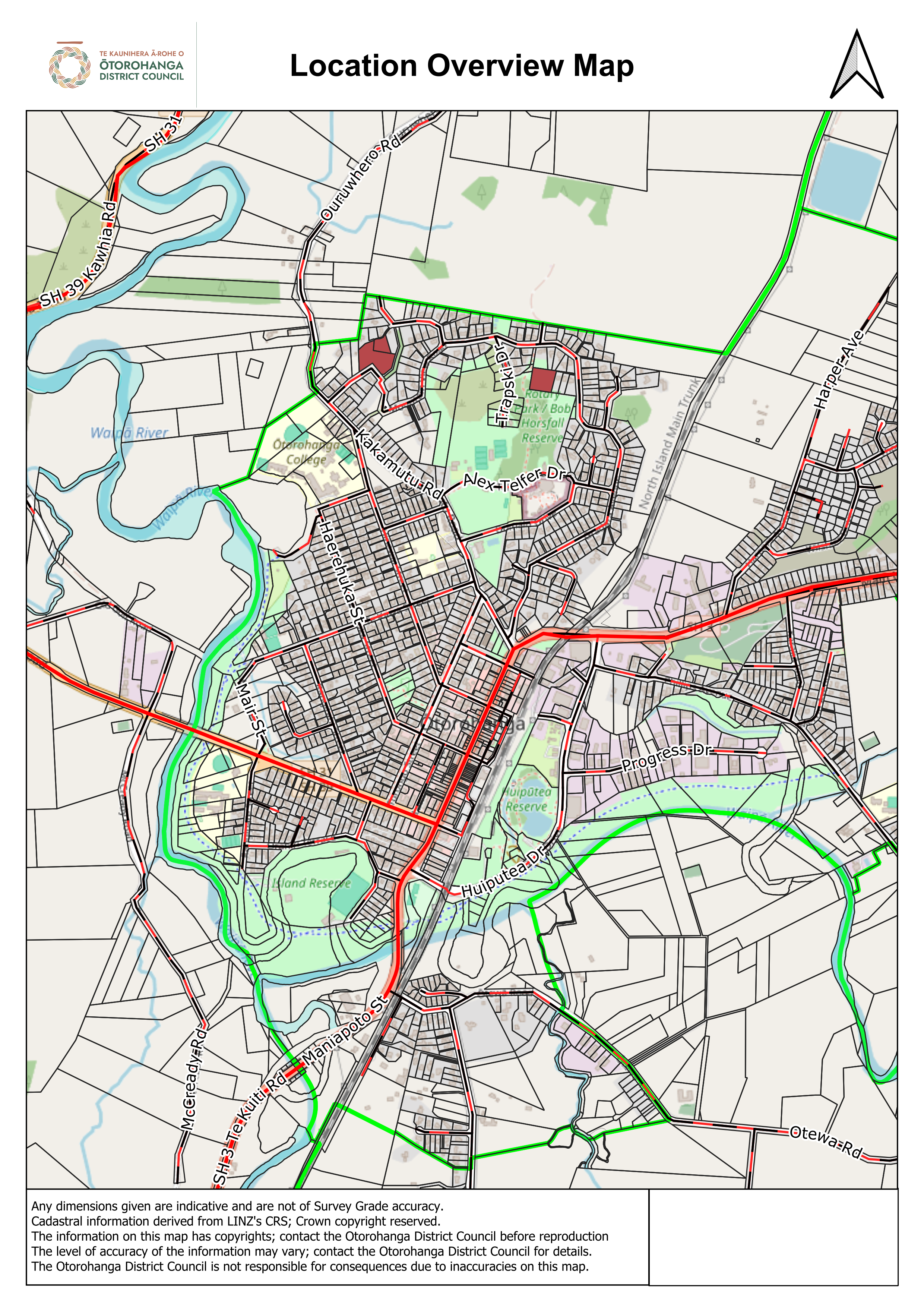
Ōtorohanga District: Reduced from entire district to three properties on 25 May 2026 – refer to map
Who approves the designation
In an area subject to a state of emergency or transition period under the Civil Defence Emergency Management Act, a designation can be made by either the Minister for Emergency Management or a person appointed or authorised under the Act. In the case of Ōtorohanga, that is the Controller and/or Mayor Rodney Dow. In the instance of the February 2026 floods, the declaration was made by the Mayor.
Powers under a designation
The Building Act provides special powers for managing buildings following an emergency and includes the ability to:
- enter buildings
- complete post-event assessments
- direct the evacuation of buildings
- put in place measures for protecting buildings and keeping people at a safe distance
- place notices and signs on buildings
- direct the owners of building or land to provide information
- direct works (urgent and non-urgent) to remove or reduce risks
- direct works for long-term use or occupation of a building.
The designation remains in place until all buildings in the district are deemed safe.
Rapid Building Assessments and placards (stickers)
As part of our legal requirements in an emergency, building assessors are conducting rapid building assessments. These are an initial safety check to assess for damage, identify existing or potential hazards and assign the appropriate placards to buildings to identify any restrictions of use.
If your house has suffered damage and it hasn’t yet been assessed, please contact our Customer Experience team on 0800 734 000 or [email protected] so a rapid building assessment can be carried out.
An assessed building is given either a red, yellow or white placard. These placards identify how the building is allowed to be used.
|
🔴Red placard |
Entry is prohibited |
|
🟡Yellow placard |
Access to the building is either restricted and cannot be used or you cannot enter except under supervision for a limited time or on essential business |
|
⚪️White placard |
Your building can be occupied - but it does not mean the building is not damaged |
For more information about what the placards mean for you and other important information, please see MBIE's website.
If a red or yellow sticker (placard) has been placed on your building, you will need to ensure the building is safe before reoccupying it.
What happens next?
First, make contact with your insurer and take photos of the damage. Depending on the damage, speak to a suitably qualified tradesperson or chartered professional engineer.
When beginning remediation and repair work on your building following severe weather events, there are things you need to consider. It's important you follow guidance from our Council and/or insurance company, especially if your home has been issued with a red or yellow placard by a Rapid Building Assessor.
It pays to check if a building consent is required for any remedial work. Some work may be exempt from building consent.
Do you need a building consent?
Building consent exemptions for damaged buildings
Once work has been completed, Council inspectors may need to re-visit your house and sign off the work before the sticker can be removed from your property. Please contact [email protected] to confirm if an inspection is required.
What happens if a building owner or resident chooses to ignore Council instructions?
The Building Act sets out a number of offences and penalties for non-compliance when the Building Act powers are in place. The responsible person who has been designated for building emergency management has the powers to make decisions about non-compliance.
The powers for offences and penalties are in sections 133BR to 133BU, and 133BW and 133BX of the Building Act. The penalties include the ability for fines of between $5000 and $200,000 to be imposed if a person intentionally fails to comply with the relevant provisions of the Building Act.