KĀWHIA BEACH ACCESS - WHAT IS GOING ON?
Access to Kāwhia Beach via the Karewa boat ramp has been an ongoing issue for many years, with differing views around vehicle access, environmental protection, cultural values and landowner rights. More recently, barriers installed along parts of the beach have raised further concerns within the community. This page explains the background, the current situation, the rules around beach access and what Council is doing to help find a way forward.
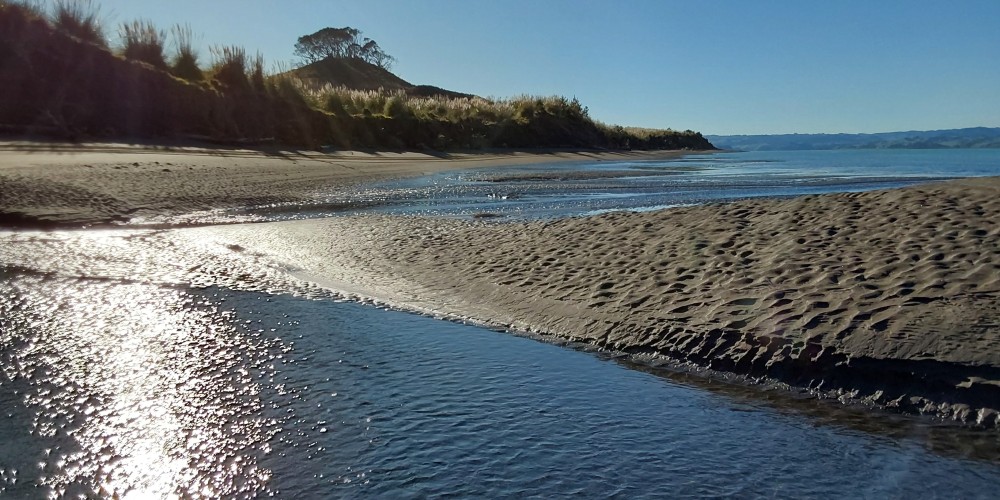
Kāwhia Beach access - what's happening and what you need to know
Update: 28 October 2026
Ōtorohanga District Council understands the concerns and frustration surrounding vehicle access to Kāwhia Beach, particularly near the Karewa boat ramp.
Bollards have been installed along parts of the foreshore, restricting vehicle access. Council has formally requested that the Trust responsible remove the bollards, and we understand this request has been declined.
Who is responsible?
Waikato Regional Council (WRC) is responsible for managing structures within the coastal marine area, including the bollards installed on the foreshore. Enquiries and concerns about these structures should be directed to Waikato Regional Council.
Council is also seeking legal advice to clarify whether Ōtorohanga District Council or New Zealand Police is the relevant controlling authority for the beach as a road under the Land Transport Act.
What happens next?
A meeting is being arranged with the relevant parties to discuss the situation and explore a way forward.
We recognise the importance of the beach to mana whenua, landowners and the wider community, and the need to balance public access with the protection of this special coastal environment.
We will continue to provide updates as more information becomes available.
Background
Barriers have been installed along parts of Karewa Beach, restricting vehicle access.
The barriers have been installed by landowners concerned about the ongoing impacts of vehicles travelling through the area.
Council understands that the intention is to prevent vehicle access across affected areas while continuing to allow people to access the beach on foot.
However, there is an important distinction between private property above the high tide mark and the area below it.
Council's position is that landowners can restrict vehicle access across their private property above the high tide mark, but cannot lawfully prevent vehicle access below the high tide mark.
Why has beach access become such an issue?
There isn't one single problem or one simple solution.
The situation involves public access, private property rights, environmental protection, cultural values, road safety and the way people use the beach.
Environmental damage and protection of the coastline
One of the biggest concerns is the impact vehicles are having on the coastal environment.
Concerns raised over time include:
-
Vehicles driving over sensitive shellfish beds and areas where kaimoana is gathered.
-
Damage to sand dunes, coastal vegetation and areas vulnerable to erosion.
-
Disturbance of seabirds, nesting areas and other wildlife.
-
Vehicles becoming stuck in soft sand, mud or incoming tides.
-
Potential pollution from vehicles, including fuel, oil and other fluids.
-
Unsafe or irresponsible driving, including speeding and driving outside appropriate areas.
Local environmental groups and landowners have raised concerns about the declining health of parts of the coastal environment, including shellfish populations and bird habitats.
These concerns are particularly significant for mana whenua, who have longstanding relationships with the coastline and responsibilities as kaitiaki.
Protecting the environment is not just about what happens today. It is also about ensuring the health of the moana and its resources for future generations.
Cultural values and the importance of the whenua and moana
Kāwhia has a rich cultural history, and the coastline holds deep significance for mana whenua.
The relationship between people and the natural environment is an important part of te ao Māori.
Concepts such as kaitiakitanga (guardianship and care for the environment), whakapapa (connections between people, places and the natural world) and mauri (the life force of the environment) are relevant to understanding why the protection of this area matters.
For mana whenua, concerns about vehicle impacts can extend beyond physical damage to the beach. They also relate to the health of the moana, the protection of mahinga kai and the ability of future generations to maintain their connections and customary practices.
Council recognises the importance of these values and the need to work respectfully with mana whenua when considering the future of beach access.
The importance of beach access to the community
For many people, access to Kāwhia Beach is part of everyday life and the area's identity.
People use the beach for fishing, recreation, visiting Te Puia Springs and spending time with whānau and friends.
Vehicle access is particularly important for those travelling longer distances along the coastline, transporting equipment or who may find walking long distances difficult.
We understand that restrictions on access can have a real impact on how people use and enjoy the beach.
Many community members are frustrated that the actions of some drivers are affecting everyone, including those who use the beach responsibly.
Others believe stronger restrictions are needed to protect the environment.
Council recognises that both access and environmental protection are important considerations, and that any lasting solution needs to take these different interests into account.
Unsafe driving and vehicles getting stuck
Another ongoing issue is unsafe driving and vehicles becoming stranded.
Some drivers underestimate the tides, the condition of the sand or the capability of their vehicles.
This has resulted in vehicles getting stuck, sometimes in areas where they are difficult to recover.
There have also been concerns about speeding, inappropriate driving and damage caused by vehicles travelling through sensitive areas.
While many people use the beach responsibly, the actions of some drivers have contributed to the wider concerns about vehicle access.
Normal road rules apply to vehicles using the beach, including Council's 20km/h speed limit.
How did we get here?
Beach access has been discussed by Council, the Kāwhia Community Board, mana whenua, landowners and community members over a number of years.
A number of steps have been taken to better understand the issues and explore possible solutions.
December 2024 – Concerns raised with the Community Board
Concerns about vehicles repeatedly becoming stuck and a proposed rāhui on the beach access route were raised with the Kāwhia Community Board.
Questions were also raised about the legal status of the beach and the responsibilities of the different agencies involved.
February 2025 – Public meeting and agreed approach
A well-attended public meeting was held in Kāwhia on 13 February 2025.
Following this meeting, the Kāwhia Community Board supported a three-stage approach:
-
Improve signage to help drivers understand the risks and rules.
-
Investigate whether an alternative vehicle access route could be developed.
-
Consider reviewing Council's Traffic Management Bylaw, depending on the outcome of the alternative access investigations.
August 2025 – Alternative access feasibility report
Council received a consultant's feasibility report investigating an alternative access route through Tainui Kāwhia Incorporated forestry land, from Tom French Reserve.
The investigation considered whether another route could provide access to the ocean beach without vehicles needing to travel through the existing sensitive coastal area.
Early 2026 – Further discussions with stakeholders
Council held a hui with key stakeholders to discuss the ongoing issues and potential ways forward.
Following those discussions, Council was advised that landowners whose property titles extend into the foreshore intended to restrict vehicle access across their land, while maintaining access on foot.
October 2026 – Barriers installed
Barriers have been installed along parts of Karewa Beach.
The installation of these barriers has brought renewed attention to the issue and raised concerns about where vehicles can lawfully travel.
Council has confirmed its position on the legal status of vehicle access and is continuing discussions with those involved.
What are the rules for driving on Kāwhia Beach?
The rules can be confusing because different laws apply, and responsibilities are shared between several agencies.
Below the high tide mark
Council's position is that vehicle access is permitted along the beach below the high tide mark under the relevant legislation and Traffic Management Bylaw.
The maximum speed is 20km/h.
Normal road rules apply, and drivers must take care around other beach users and the environment.
Above the high tide mark
Some land adjoining the beach is privately owned, including Māori freehold land.
Landowners have rights to control vehicle access across their private property above the high tide mark.
This means being allowed to drive along the beach below high tide does not automatically give someone permission to drive across private land to get there.
What about walking access?
Public walking access along the common marine and coastal area is generally protected under the Marine and Coastal Area (Takutai Moana) Act 2011, subject to the provisions and exceptions in that legislation.
The landowners involved have indicated that their restrictions are intended to apply to vehicles, rather than people accessing the beach on foot.
Could there be another way onto the beach?
One of the options being explored is an alternative vehicle access route through Tainui Kāwhia Incorporated forestry land, starting from the Tom French Reserve area.
This option has been investigated because it could provide another way for vehicles to reach the ocean beach while reducing the need to travel through sensitive areas near the harbour.
A feasibility report was completed in August 2025, including preliminary design and cost information.
However, investigating a route is not the same as approving or building it.
Any alternative access arrangement would need to consider landowner agreement, environmental effects, required approvals, construction costs, ongoing maintenance and funding.
Council has been working with Tainui Kāwhia Incorporated and other stakeholders to explore the options.
No final decision on an alternative access route has been confirmed in the information currently available.
More News

ŌTOROHANGA DISTRICT COUNCIL REFLECTS ON A YEAR OF CHALLENGES AND ACHIEVEMENTS
COUNCIL PREPARE FOR CHANGES TO RESOURCE MANAGEMENT RULES
RESOURCE MANAGEMENT CHANGES – WHAT YOU NEED TO KNOW
GENERAL ELECTION 2026

FOOD LOVERS MASTERCLASS: CHRISTMAS EDITION